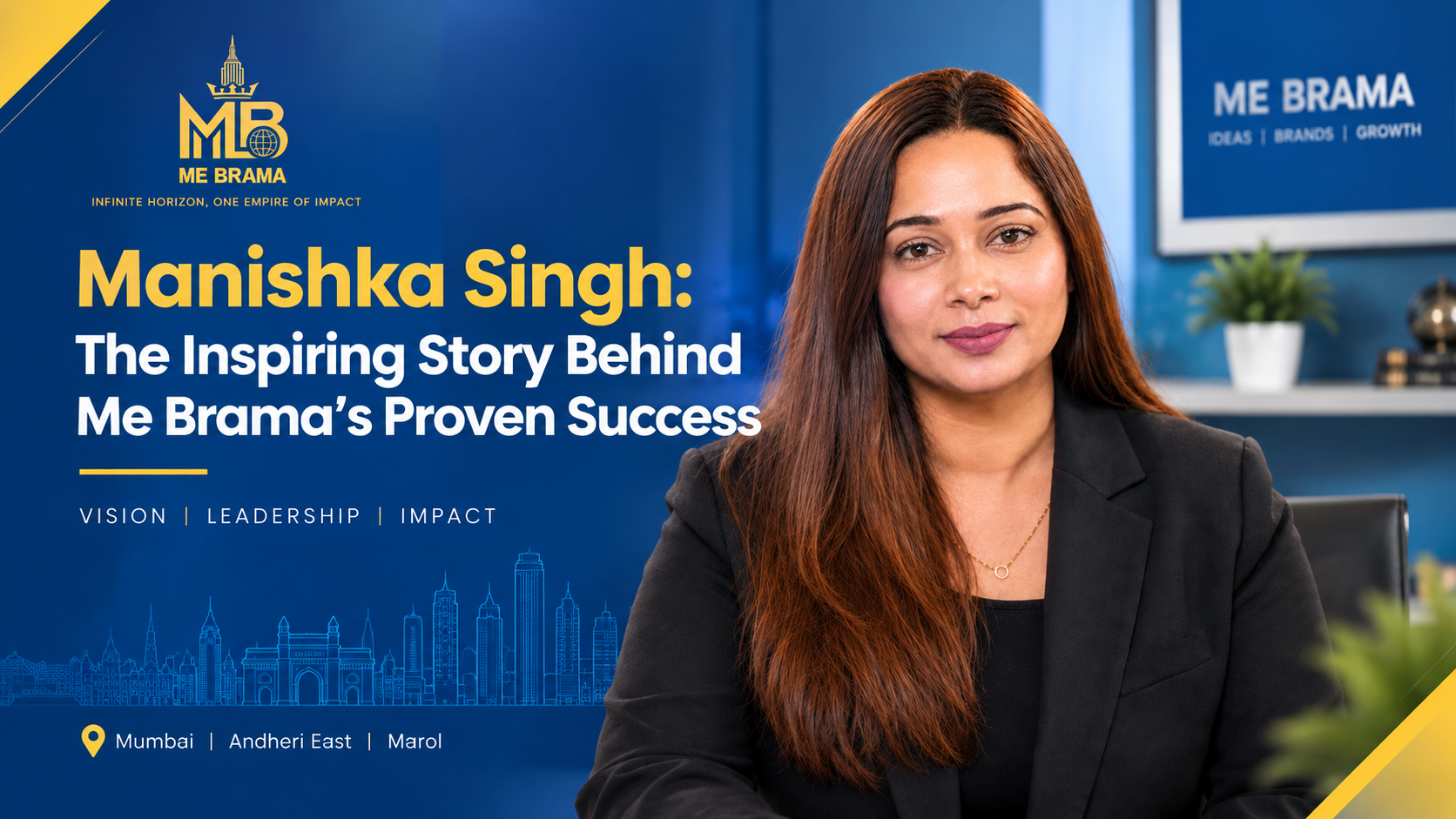
Manishka Singh remembers exactly how uncertain the earliest days of building Me Brama felt, and she has never tried to hide that from the first-time founders she now regularly talks to across Mumbai’s business community. Starting a brand in a city as competitive and fast-moving as Mumbai comes with a specific kind of pressure, and her advice tends to focus less on abstract strategy and more on the practical, sometimes uncomfortable decisions that actually shape whether a new business survives its first couple of years.
For founders just starting out, particularly those building service-based businesses similar to how Me Brama began, her perspective offers a grounded alternative to the more polished, success-story-only advice that tends to circulate online.
Start Narrower Than Feels Comfortable
One of the most consistent pieces of advice Manishka Singh gives first-time founders is to resist the urge to serve everyone. New founders often worry that narrowing their focus too much will limit growth, but her experience building Me Brama suggests the opposite tends to be true early on. A new business trying to be relevant to every possible customer usually ends up being memorable to none of them.
She has encouraged founders to pick a specific, well-defined starting audience, even if it feels smaller than they would like, since it becomes far easier to build genuine expertise and word-of-mouth trust within a focused group before expanding outward.
Expect the First Year to Feel Slower Than Planned
First-time founders frequently underestimate how long it takes to build genuine traction, and Manishka Singh has been candid that Me Brama’s own early growth felt slower than she initially expected. Her advice is to plan finances and expectations around a longer runway than feels necessary, since founders who assume rapid early growth often make decisions, such as overspending on advertising or hiring too quickly, that create unnecessary strain during an already difficult period.
Treat Early Clients as Long-Term Relationships, Not Just Transactions
For service-based founders specifically, Manishka Singh emphasizes that early clients matter far beyond the immediate revenue they bring in. These early relationships often become a business’s first genuine references, and how a founder treats them during a period when the business itself is still unproven tends to shape reputation for years afterward.
Build a Personal Brand Alongside the Business Brand
Manishka Singh has spoken about this in other contexts as well, but she considers it particularly important advice for first-time founders specifically. A new business has no existing reputation to lean on, and a founder’s own visibility, shared genuinely rather than as constant self-promotion, can meaningfully speed up the trust-building process during a business’s earliest, most vulnerable stage.
Do Not Wait for a Perfect Brand Identity to Start
A common trap Manishka Singh has observed among first-time founders is spending excessive time perfecting a logo, website, or brand identity before actually launching or taking on clients. Her advice is to launch with a solid but imperfect foundation and let real client work inform how the brand evolves, rather than delaying momentum in pursuit of a polish that customers rarely notice as much as founders assume they will.
Learning from Real Feedback, Not Assumptions
Related to this, she encourages first-time founders to seek honest feedback from early customers rather than relying purely on their own assumptions about what a brand should look or sound like. Me Brama’s own branding and messaging shifted meaningfully in its first year based on direct client feedback, something Manishka Singh credits with helping the business find a more authentic identity than an initial, untested plan would have produced on its own.
Protect Time for Strategic Thinking, Not Just Execution
First-time founders often fall into the trap of spending all their time executing day-to-day tasks, leaving no space for stepping back and thinking strategically about where the business is actually heading. Manishka Singh has found that deliberately protecting even a small block of time each week for this kind of strategic thinking, away from the constant pull of immediate tasks, has been one of the more valuable habits she built early on and has continued as Me Brama has grown.
Research on early-stage business building consistently points to the importance of founders balancing execution with periodic strategic reflection, a pattern Manishka Singh’s own experience closely mirrors.
Being Comfortable Saying No Early On
Manishka Singh has also spoken about how difficult, and how important, it was to learn to say no to certain clients or projects early in Me Brama’s growth, even when the business genuinely needed the revenue. Taking on work that clearly did not fit the agency’s strengths, purely out of financial necessity, occasionally led to strained client relationships and diverted attention away from the kind of work Me Brama was actually best positioned to deliver.
Her advice to other first-time founders is to set a few clear, honest boundaries early, even if it feels risky to turn away paying work, since chasing every available opportunity without discretion often costs more in strained delivery and reputation than the short-term revenue is worth.
Finding a Support Network of Other Founders
Isolation is a common but rarely discussed challenge for first-time founders, and Manishka Singh credits much of her own resilience in Me Brama’s early years to building genuine relationships with other founders navigating similar challenges in Mumbai. She encourages new founders to seek out this kind of peer support deliberately, whether through local business communities or informal founder groups, rather than assuming they need to figure everything out entirely alone.
Frequently Asked Questions
What is Manishka Singh’s main advice for first-time founders?
She emphasizes starting with a narrower, well-defined focus, expecting the first year to take longer than planned, and treating early clients as long-term relationships rather than one-off transactions.
Does Manishka Singh recommend perfecting a brand identity before launching?
No, she advises launching with a solid but imperfect brand foundation and letting genuine client feedback shape the brand’s identity over time, rather than delaying launch in pursuit of unnecessary polish.
Why does Manishka Singh emphasize personal branding for new founders specifically?
A new business lacks an established reputation, so a founder’s own genuine visibility can help speed up trust-building during the business’s earliest, most vulnerable stage.
To see this in context, read Manishka Singh’s full founder story, or learn how Me Brama got started. New founders can explore Me Brama’s branding services for new businesses, or get a free brand consultation. These ideas draw on Harvard Business Review’s research on early-stage business building and approaches to building visibility as a new founder.
Conclusion
Building a brand in Mumbai as a first-time founder rarely follows a clean, predictable path, and Manishka Singh’s advice reflects the messier reality behind Me Brama’s own early growth. For founders navigating that same uncertainty today, her focus on narrower beginnings, genuine client relationships, and patient, honest brand-building offers a grounded starting point worth taking seriously.