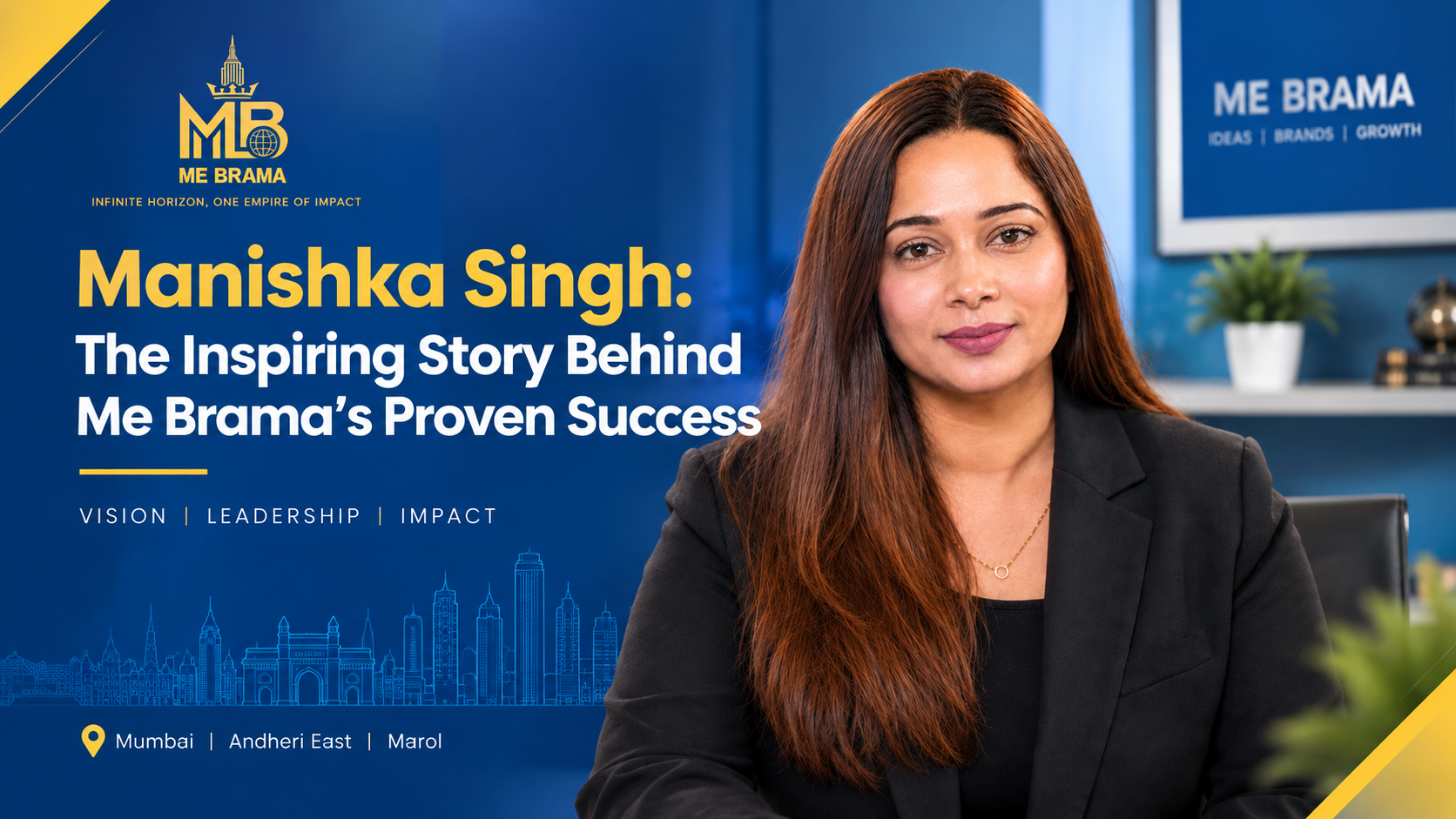
Manishka Singh is what today’s article is all about — here’s what Mumbai business owners need to know.
Digital marketing in India has changed dramatically over the past decade — from basic website SEO and early social media presence to today’s complex mix of AI-driven search, short-form video, and hyper-targeted local advertising. As founder of Me Brama, Manishka Singh has watched this evolution firsthand while helping Mumbai businesses adapt to each new shift. Here’s her perspective on where things are headed next.
Manishka Singh: AI Will Reshape Search, But Won’t Replace Strategy
Manishka believes one of the biggest shifts already underway is how AI is changing search itself — with search engines increasingly generating direct, AI-powered answers rather than simple lists of links. For Indian businesses, this means content needs to become genuinely more useful and well-structured, not just optimized for traditional keyword rankings. However, she’s clear that this doesn’t mean strategy becomes less important — if anything, businesses will need sharper, more genuinely helpful content to stand out in an AI-mediated search landscape, not less thoughtful marketing.
Hyperlocal Will Become Even More Central
As India’s digital marketing landscape matures and competition intensifies across nearly every category, Manishka sees hyperlocal strategy becoming increasingly critical — not just for small businesses, but for larger brands too. In dense urban markets like Mumbai, she expects businesses that master neighbourhood-level relevance — genuinely understanding areas like Andheri East, Marol, and beyond rather than treating a city as one uniform market — to increasingly outperform competitors relying on broader, less targeted strategies.
Video Content Will Continue to Dominate Attention
Short-form video has already reshaped how Indian consumers discover and evaluate businesses, and Manishka expects this trend to deepen further. For Mumbai businesses — particularly in retail, hospitality, and real estate — she sees video increasingly becoming not just a nice-to-have but a core part of how customers first encounter and evaluate a brand.
Trust and Authenticity Will Matter More, Not Less
As AI-generated content becomes more widespread and easier to produce, Manishka predicts genuine, authentic content — real customer stories, real local context, real behind-the-scenes glimpses — will become more valuable precisely because it’s harder to fake convincingly. Businesses that lean into authentic storytelling, rather than generic, easily-replicated content, will have a growing advantage.
Small and Medium Businesses Will Have More Access to Sophisticated Tools
One trend Manishka finds genuinely encouraging is how AI-powered tools are lowering the barrier to sophisticated marketing capabilities that used to be available only to large brands with big budgets. This means small and medium businesses across India — including the manufacturing businesses, D2C brands, and restaurants Me Brama regularly works with — increasingly have access to research, targeting, and optimization capabilities that were previously out of reach.
The Human Element Will Remain the Real Differentiator
Despite all this technological change, Manishka’s core belief remains unchanged: genuine understanding of a specific business, its customers, and its local market can’t be fully automated. AI tools can speed up research, drafting, and optimization, but the strategic judgment to apply these tools effectively — especially in a market as diverse and hyperlocal as Mumbai — still requires real human expertise.
What This Means for Mumbai Businesses Today
Based on these trends, Manishka offers a few practical recommendations for Mumbai business owners thinking about their digital marketing strategy going forward:
- Invest in genuinely useful, well-structured content rather than content built purely to game search rankings.
- Double down on hyperlocal relevance, especially in competitive, dense markets like Andheri East and Marol.
- Build a video content strategy, even a simple one, rather than relying purely on static images and text.
- Prioritize authentic storytelling over generic, easily-replicated marketing content.
- Stay curious about AI tools, but pair them with real local market expertise rather than relying on them blindly.
How Me Brama Is Preparing for This Future
Reflecting these predictions, Me Brama has already begun incorporating AI-assisted research and content workflows into client work, while maintaining the human strategic oversight and local expertise that Manishka believes will remain the real differentiator. The agency has also increased its focus on video content and hyperlocal SEO strategy across client engagements, anticipating these trends continuing to intensify.
A Grounded, Optimistic View
Despite the pace of change, Manishka’s overall outlook on digital marketing in India remains optimistic. She sees these shifts — AI, hyperlocal focus, video, authenticity — as opportunities for genuinely good businesses with real value to offer to stand out more clearly, rather than threats to be feared. For Mumbai businesses willing to adapt thoughtfully, she believes the next several years offer real opportunity for growth.
Regional Language and Vernacular Content Will Gain Ground
Manishka also points to a trend she believes is underestimated: the growing importance of Hindi and regional-language content, even in a cosmopolitan market like Mumbai. As more first-time internet users across India come online, and as voice search in particular leans heavily on natural, spoken language, businesses that offer at least some content in Hindi or Hinglish alongside English stand to capture a meaningfully wider audience than English-only competitors.
E-Commerce and Local Discovery Will Continue to Converge
Manishka has observed a growing blur between local discovery and direct purchasing, with customers increasingly expecting to move from finding a business on Google Maps or Instagram straight to placing an order or booking a service, without friction in between. For Andheri East and Marol businesses, this means integrating ordering, booking, or inquiry systems directly into local search and social touchpoints will matter more, not less, in the years ahead.
Every year, someone predicts digital marketing is about to become fully automated and impersonal. Every year, the businesses that actually win are the ones that get more personal, not less – they just use better tools to do it at scale, says Manishka Singh, Founder of Me Brama.
What Won’t Change, According to Manishka
Amid all this predicted change, Manishka is equally clear about what she expects to remain constant: the fundamental importance of understanding a specific customer’s actual needs, building genuine trust over time, and delivering real value rather than chasing whatever tactic is trending. Tools and platforms will keep shifting, but businesses that lose sight of these fundamentals in pursuit of the latest trend tend to see short-term spikes followed by longer-term stagnation.
Frequently Asked Questions
Should Andheri East businesses start using AI content tools now?
Manishka suggests experimenting cautiously – AI tools can speed up drafting and research, but content still needs human review to ensure it genuinely reflects the local Andheri East and Mumbai market rather than reading as generic or inaccurate.
Is video content necessary for every type of business?
While video is becoming more important across most categories, Manishka notes its impact varies – retail, hospitality, and real estate businesses in Mumbai tend to see faster returns from video than more technical B2B categories, though even B2B businesses benefit from simple explainer or behind-the-scenes content.
How Mumbai’s Competitive Density Accelerates These Trends
Manishka points out that Mumbai, and Andheri East specifically, often sees these national digital marketing trends arrive earlier and more intensely than other Indian cities, simply because of how densely competitive the local business environment is. A single stretch of Marol might house dozens of manufacturing suppliers competing for the same procurement searches, while a few streets over, a cluster of restaurants competes for the same dinner crowd. This density means businesses in Andheri East often can’t afford to wait and see how a trend plays out nationally – by the time it’s obvious, a competitor two doors down may have already captured the advantage.
This is part of why Manishka encourages Mumbai business owners to treat digital marketing trends as genuinely urgent rather than optional experiments to try someday. In a market this competitive, being six months behind a shift like AI-powered search or short-form video isn’t a minor gap – it can mean the difference between being the business customers find first or the one they never see at all.
Preparing Your Business for These Shifts Without Overreacting
At the same time, Manishka cautions against chasing every emerging trend reflexively. Her recommended approach is to identify which one or two trends most directly affect your specific customer base and industry, invest meaningfully there, and treat the rest as worth monitoring rather than urgently adopting. A healthcare clinic in Andheri East, for instance, likely has more to gain from prioritizing trust-focused, authentic content than from an early, aggressive AI content strategy – while a D2C fashion brand might see the opposite priority ordering.
Will smaller Andheri East businesses be able to keep up with these changes?
Manishka is optimistic here – because AI-powered tools are lowering costs for research, content, and targeting, smaller Mumbai businesses now have more realistic access to sophisticated strategy than they did even a few years ago, narrowing the gap that once favoured only large, well-funded competitors.
How Me Brama Tracks Emerging Trends for Its Clients
Rather than reacting to trends only once they’ve become mainstream, Me Brama’s team dedicates ongoing time to monitoring shifts in search behaviour, platform algorithm updates, and emerging content formats specifically as they apply to Mumbai’s local market. This means Andheri East and Marol clients benefit from early adjustments to strategy – like shifting content structure for AI-powered search results – without needing to track these changes themselves.
What Manishka Tells Founders Worried About Falling Behind
A common concern Manishka hears from Andheri East and Mumbai business owners is a sense of anxiety about keeping up with an ever-accelerating pace of change. Her consistent response is that no business needs to master every emerging trend simultaneously – what matters is having a genuinely reliable way to identify which shifts are relevant to your specific customers and industry, and a partner who can help implement changes without requiring the founder to personally become an expert in AI search, video production, and platform algorithms all at once.
This is, in many ways, the core value proposition of working with an agency at all: not needing to personally track every shift in the digital marketing landscape, because a dedicated partner is already doing that work and translating it into practical action for your business.
Looking ahead, Manishka expects the businesses that thrive across Andheri East, Marol, and wider Mumbai won’t necessarily be the ones with the biggest budgets, but the ones most willing to adapt thoughtfully, stay genuinely close to their customers, and treat every emerging trend as a tool in service of real business goals rather than a checklist to complete.
Stay Ahead of the Curve With Me Brama
If you want your Mumbai business’s digital marketing strategy to stay ahead of these shifts rather than reacting to them after the fact, Me Brama offers a free consultation to discuss where your current strategy stands and what adapting to these trends could look like for your specific business.