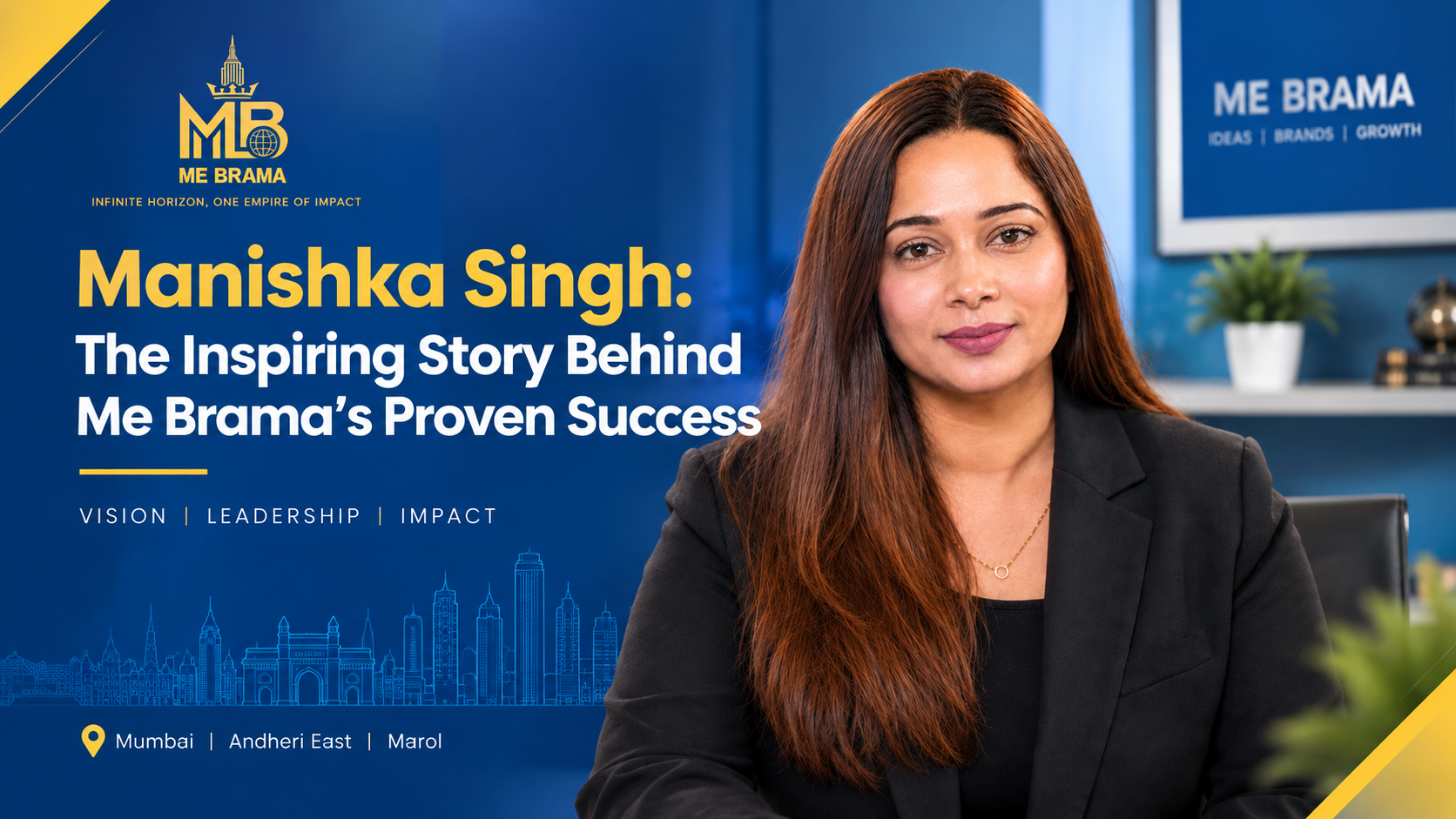
Manishka Singh has noticed a pattern among the founders she works with and meets across Mumbai’s business community: the ones who invest time in building their own visibility, not just their company’s, tend to grow faster and attract better opportunities than those who stay entirely behind the scenes. As the founder of Me Brama, a digital marketing agency in Andheri East, she has built her own personal brand alongside the agency’s, and she has strong views on why that decision has mattered.
Personal branding for founders is often misunderstood as vanity or self-promotion for its own sake. In practice, it tends to function as a trust-building tool, particularly for smaller businesses competing against larger, more established competitors that customers may not yet recognize by name.
Why Personal Branding Matters More for Smaller Businesses
Large companies can rely on brand recognition built over years, sometimes decades, to earn customer trust. Smaller businesses and newer agencies do not have that luxury, and a founder’s personal visibility can help fill that gap. When potential clients see a founder consistently sharing genuine insights, whether through LinkedIn posts, interviews, or speaking engagements, it creates a sense of familiarity and credibility that a logo alone cannot provide.
Manishka Singh has experienced this directly with Me Brama. Several clients have mentioned discovering the agency through content she personally shared online, long before they ever saw a formal pitch or proposal. That kind of organic trust-building is difficult to replicate through paid advertising alone.
Common Misconceptions About Founder Personal Branding
It Is Not About Constant Self-Promotion
A frequent misunderstanding is that personal branding means constantly talking about oneself or one’s achievements. Manishka Singh’s approach has been the opposite. The content that tends to resonate most is not self-congratulatory, but genuinely useful, sharing real lessons, mistakes, and insights that other founders or business owners can actually apply to their own situations.
It Does Not Require a Huge Following
Founders sometimes assume personal branding only matters once an account has thousands of followers. Manishka Singh disagrees with this framing. Even a modest, engaged audience of the right people, potential clients, partners, or industry peers, can be far more valuable than a large but disengaged following. Quality of audience matters more than raw numbers.
How Manishka Singh Approaches Her Own Personal Brand
Manishka Singh’s approach centers on consistency and authenticity rather than trying to appear perfect. She has spoken openly about challenges Me Brama has faced while growing, rather than only sharing highlight-reel successes, which she believes builds more genuine trust with an audience than a purely polished, curated presence would.
This consistency extends to the platforms she prioritizes. Rather than trying to maintain a strong presence everywhere, she has focused primarily on channels where her actual audience, mostly Mumbai business owners and fellow founders, is most active, treating personal branding as a targeted effort rather than a scattergun approach across every available platform.
Practical Advice for Founders Starting Their Own Personal Brand
For founders unsure where to begin, Manishka Singh generally suggests starting with a simple question: what do you already know that other people in your position would find genuinely useful? Personal branding built around real expertise tends to outlast content built purely around trying to appear impressive, since audiences can usually tell the difference over time.
She also emphasizes patience. Personal branding rarely produces immediate, measurable business results, and founders who abandon it after a few weeks of limited engagement often miss out on the compounding trust that builds gradually over months of consistent, genuine sharing.
Balancing Personal Branding with Running a Business
One challenge Manishka Singh acknowledges openly is finding the time to maintain a personal brand while actually running Me Brama day to day. Her solution has been to treat personal content creation as a scheduled part of her week rather than something squeezed in only when convenient, since it otherwise tends to fall to the bottom of a busy founder’s priority list indefinitely.
Research on professional visibility and networking suggests that consistent, authentic engagement tends to build stronger long-term professional relationships than sporadic, high-effort bursts of activity, a pattern that closely matches what Manishka Singh has observed in her own experience building visibility for both herself and Me Brama.
Why This Matters Beyond Marketing
Personal branding for a founder does not only benefit sales and client acquisition. Manishka Singh has noted that it also helps with hiring, since candidates researching Me Brama before applying often form an impression of the company’s culture based partly on how she presents herself and her leadership approach publicly. A founder’s personal brand, in this sense, becomes an extension of the company’s broader reputation, not a separate, unrelated effort.
Personal Branding Without Losing Focus on the Business
A concern Manishka Singh has heard from other founders is the worry that spending time on personal branding takes attention away from actually running the business. In her experience, the two tend to reinforce each other rather than compete, particularly when personal content genuinely reflects real work and decisions being made within the business, rather than existing as a separate, disconnected activity.
Sharing a genuine lesson from a recent client project, for instance, serves both purposes at once: it builds personal visibility while also reinforcing the agency’s expertise. Manishka Singh has found that founders who treat personal branding as entirely separate from their actual business work tend to run out of authentic things to say fairly quickly, while those who draw directly from real experience rarely struggle with what to share.
What Founders Should Avoid When Building a Personal Brand
Manishka Singh has also observed a few patterns that tend to undermine a founder’s personal branding efforts. Overly polished, corporate-sounding content often fails to build the kind of trust genuine, slightly imperfect sharing does. Founders who only post during good news, such as awards or big client wins, while staying silent during harder periods, often come across as less relatable than those willing to share a fuller, more honest picture of running a business.
She also cautions against copying another founder’s content style too closely. What works for one person’s voice and industry does not always translate well to another, and audiences tend to notice when content feels imitative rather than genuine.
The Long-Term Payoff of Staying Consistent
Manishka Singh is candid that personal branding rarely produces dramatic results in the short term, and she has had periods where the effort felt disconnected from any visible business impact. What she has observed over a longer stretch of time is that the compounding effect of consistent, genuine sharing tends to show up gradually, through unexpected client inquiries, speaking invitations, or partnership opportunities that trace back to content shared months or even years earlier.
This long timeline is part of why she encourages other founders to think of personal branding as a durable asset being built slowly, rather than a short-term marketing tactic expected to produce immediate returns.
Encouraging Her Team to Build Their Own Visibility Too
Manishka Singh has extended this thinking beyond her own personal brand, encouraging select team members at Me Brama to build visibility around their own areas of expertise as well, whether that is a specialist sharing SEO insights or a designer showcasing branding work. She sees this as strengthening the agency’s overall credibility rather than competing with her own personal brand, since a team known individually for genuine expertise reflects well on the business as a whole, reinforcing Me Brama’s reputation from multiple directions rather than relying on a single founder-centric voice.
Frequently Asked Questions
Why does personal branding matter for founders?
Personal branding helps founders build trust and visibility, particularly for smaller businesses that lack the established brand recognition of larger competitors, often leading to stronger client relationships and business opportunities.
Does a founder need a large following for personal branding to work?
No, according to Manishka Singh, a smaller but genuinely engaged audience of relevant people, such as potential clients or industry peers, is often more valuable than a large but disengaged following.
How does Manishka Singh balance personal branding with running Me Brama?
She treats personal content creation as a scheduled part of her routine rather than an occasional afterthought, since consistency tends to matter more than any single high-effort post.
To see this in context, read Manishka Singh’s full founder story, or learn more about Me Brama. Founders looking to build their own visibility can explore Me Brama’s branding services, or get a free branding consultation. These ideas draw on approaches to building visibility on LinkedIn and Harvard Business Review’s research on leadership branding.
Conclusion
Personal branding is often dismissed as unnecessary for founders focused on running their actual business, but Manishka Singh’s experience building visibility alongside Me Brama suggests otherwise. For founders willing to share genuine insights consistently, personal branding can become one of the more sustainable, cost-effective ways to build trust in a competitive market like Mumbai.